
Helping teachers get what their students need
Took the legwork out of funding a classroom, so more of a teacher's day goes back to students.
Took the legwork out of funding a classroom, so more of a teacher's day goes back to students.
Designed an email-ingestion-powered triage product so underwriters work their stack by priority and appetite, not date received.
TuroPeer-to-peer car-sharing marketplace, rent cars directly from local hosts.
Brought the new Turo brand to the Android app and grounded it in Material Design.
A quiet place to keep the moments worth remembering, each one saved with the thought it left you and the song that brings it back.
A personal rating log and running want-list, tracking what you've tried and keeping a shortlist of everything you still want to buy, eat, or experience.
Designed an email-ingestion-powered triage product so underwriters work their stack by priority and appetite, not date received.
Two Sigma Insurance Quantified builds software that helps commercial insurance underwriters decide which risks to take. After building a bespoke product for a single client, the company moved to selling focused modules instead of one large platform, and I designed the first one.
Underwriters were getting more applications than they could work, in no useful order. Applications arrived incomplete, later forms contradicted earlier ones, and nothing indicated which ones deserved attention first, so the stack got worked by date received. The module pulls applications in from email, normalizes the data, and puts a priority score and an appetite check on every one.
When you get hundreds of applications, the hard part isn't assessing risk, it's knowing which ones deserve your time at all.
Team: 2 product designers, 1 product manager, 5 software engineers, 3 data scientists.
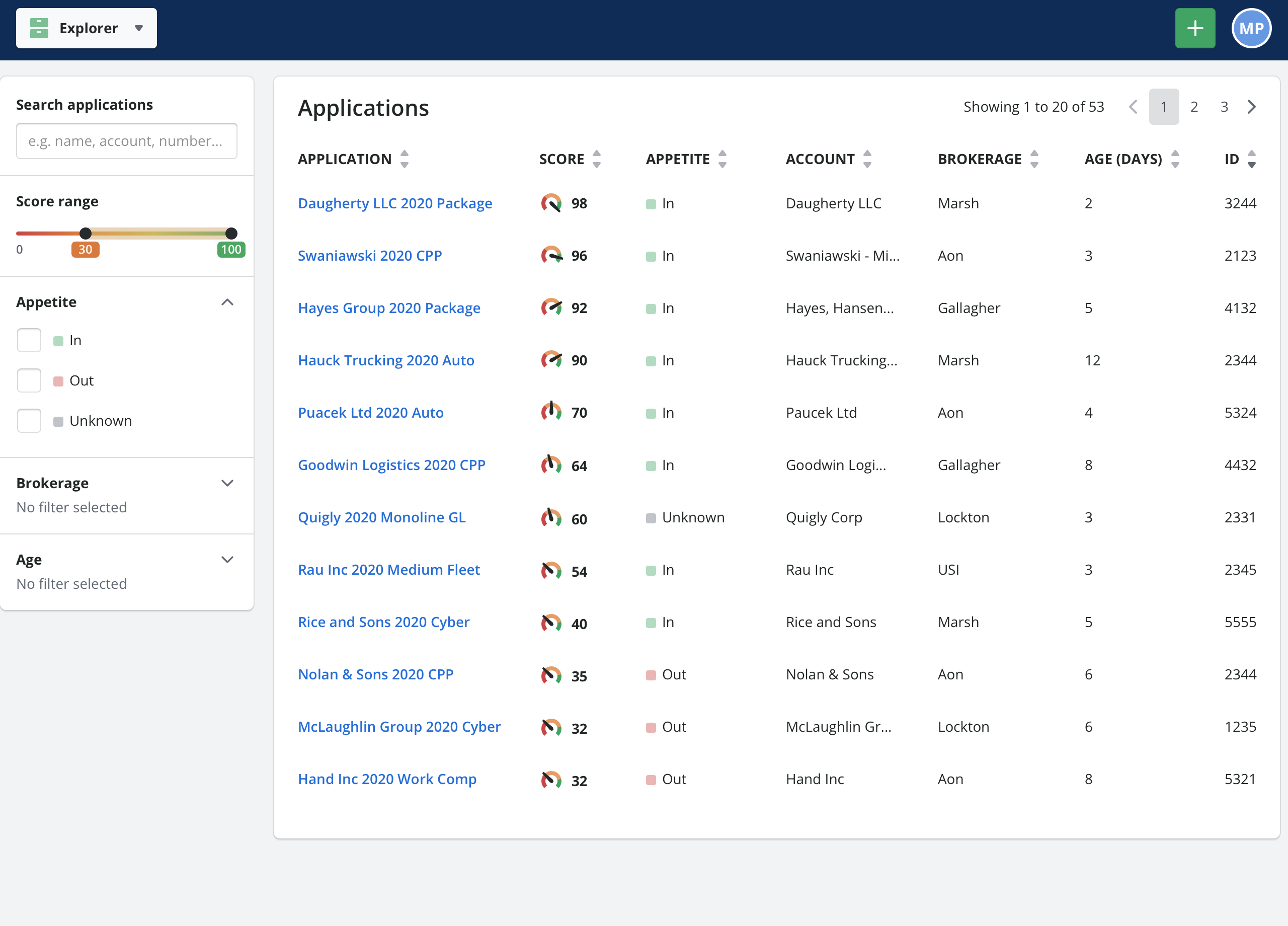
Put every application in one place, ordered by priority
Explorer sorts the whole stack by priority score and filters it by appetite, age, and brokerage, so the most urgent applications surface first and the ones outside the carrier's book never take up review time.
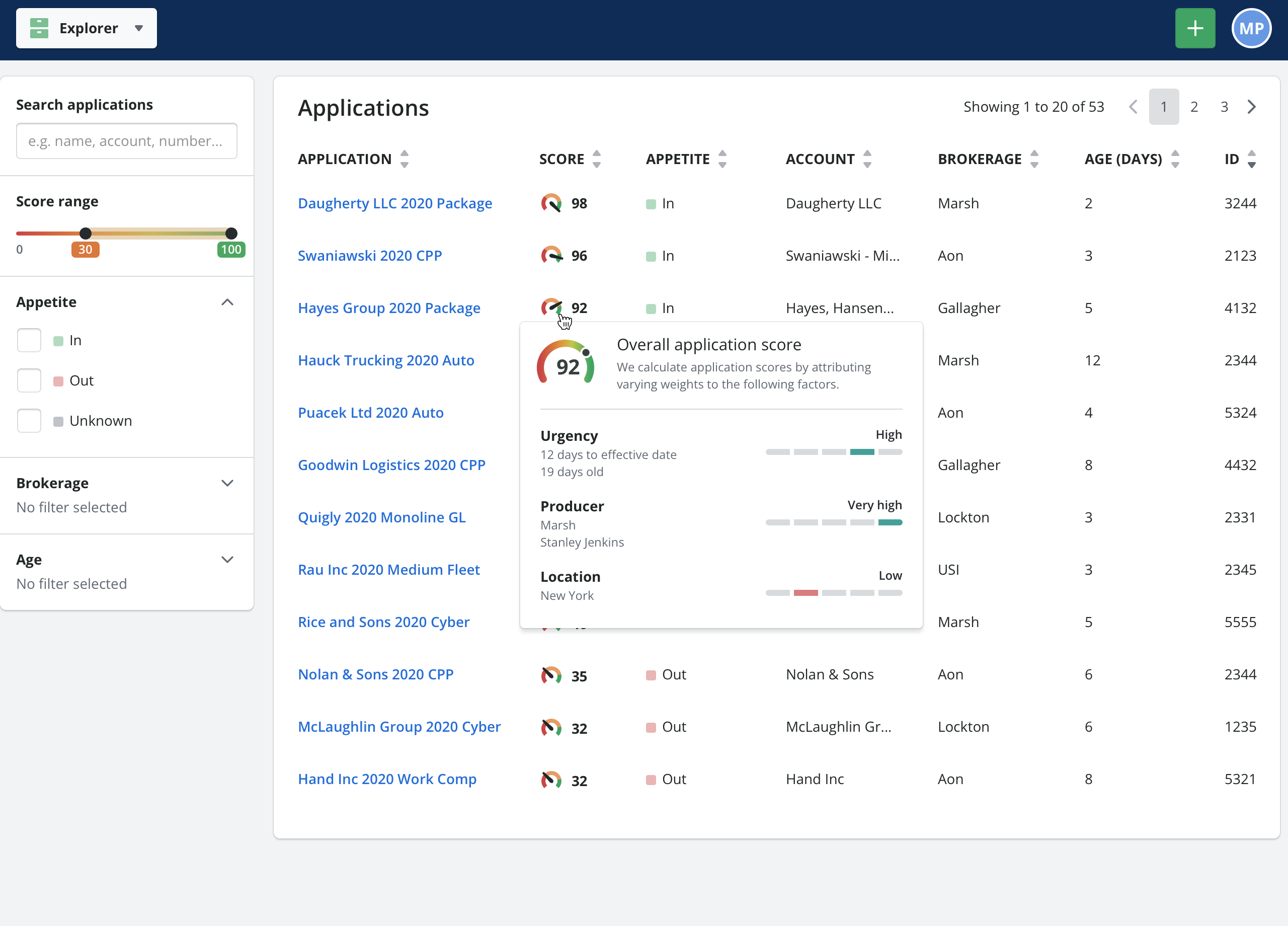
Made the priority score something an underwriter could question
Every score opens into the factors behind it: how close the effective date is, which broker sent it, and where the risk sits. Underwriters can see why an application ranked where it did instead of taking the number on faith.
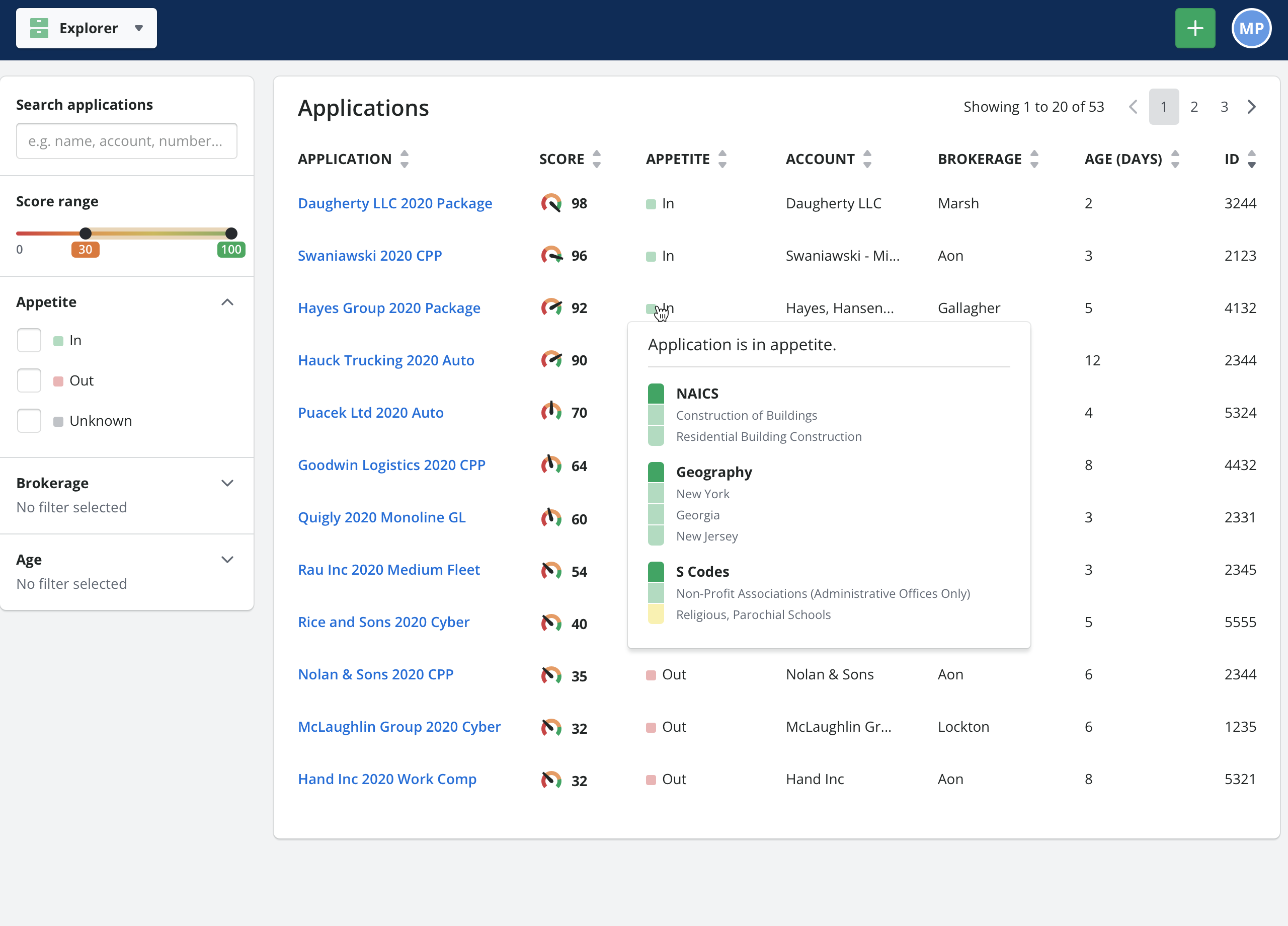
Filtered out business the carrier would never write
The appetite check rates each application against the lines of business and geographies the carrier actually insures, so submissions outside its book are flagged before anyone spends time reading them.
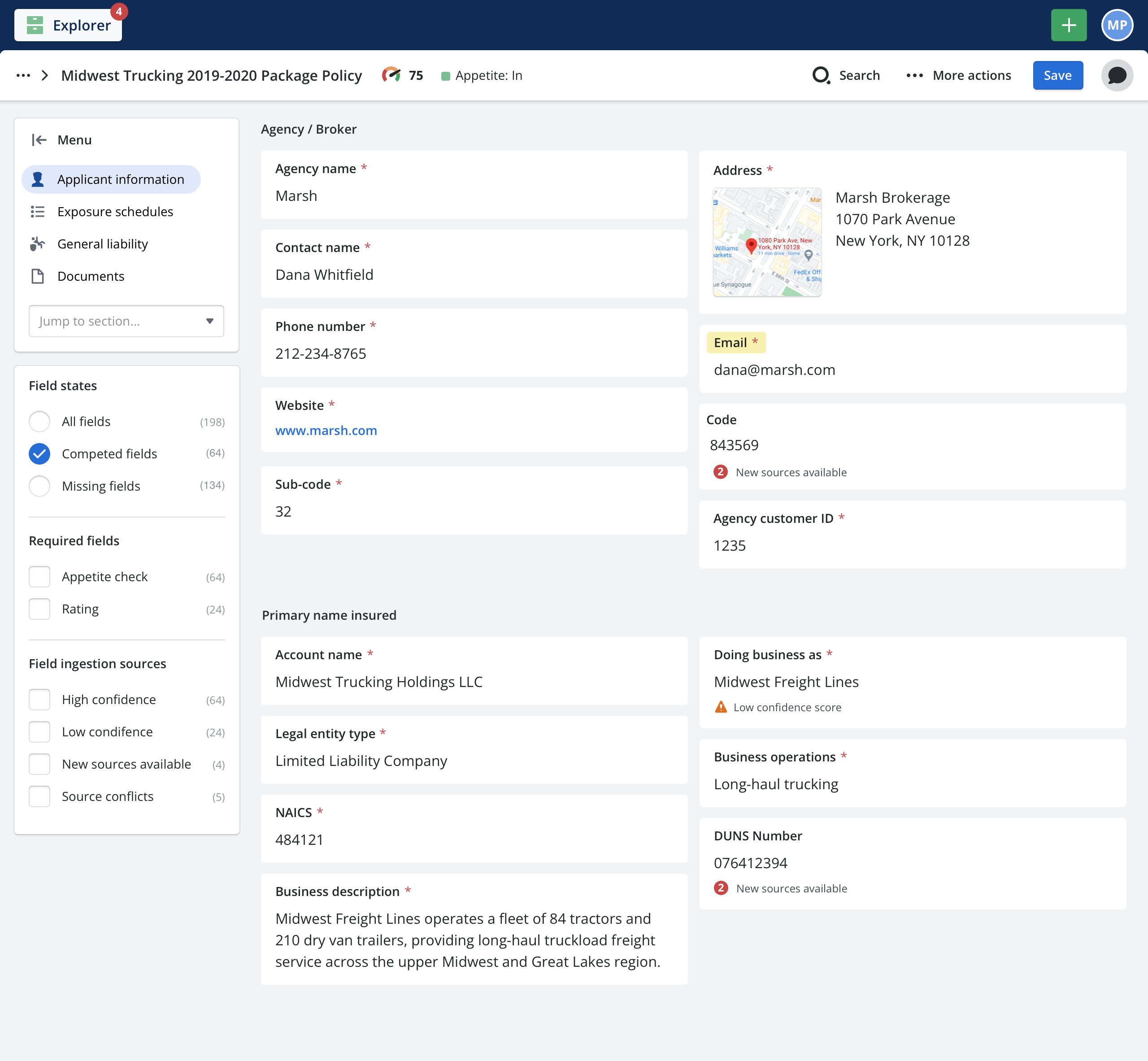
Made the ingested data navigable
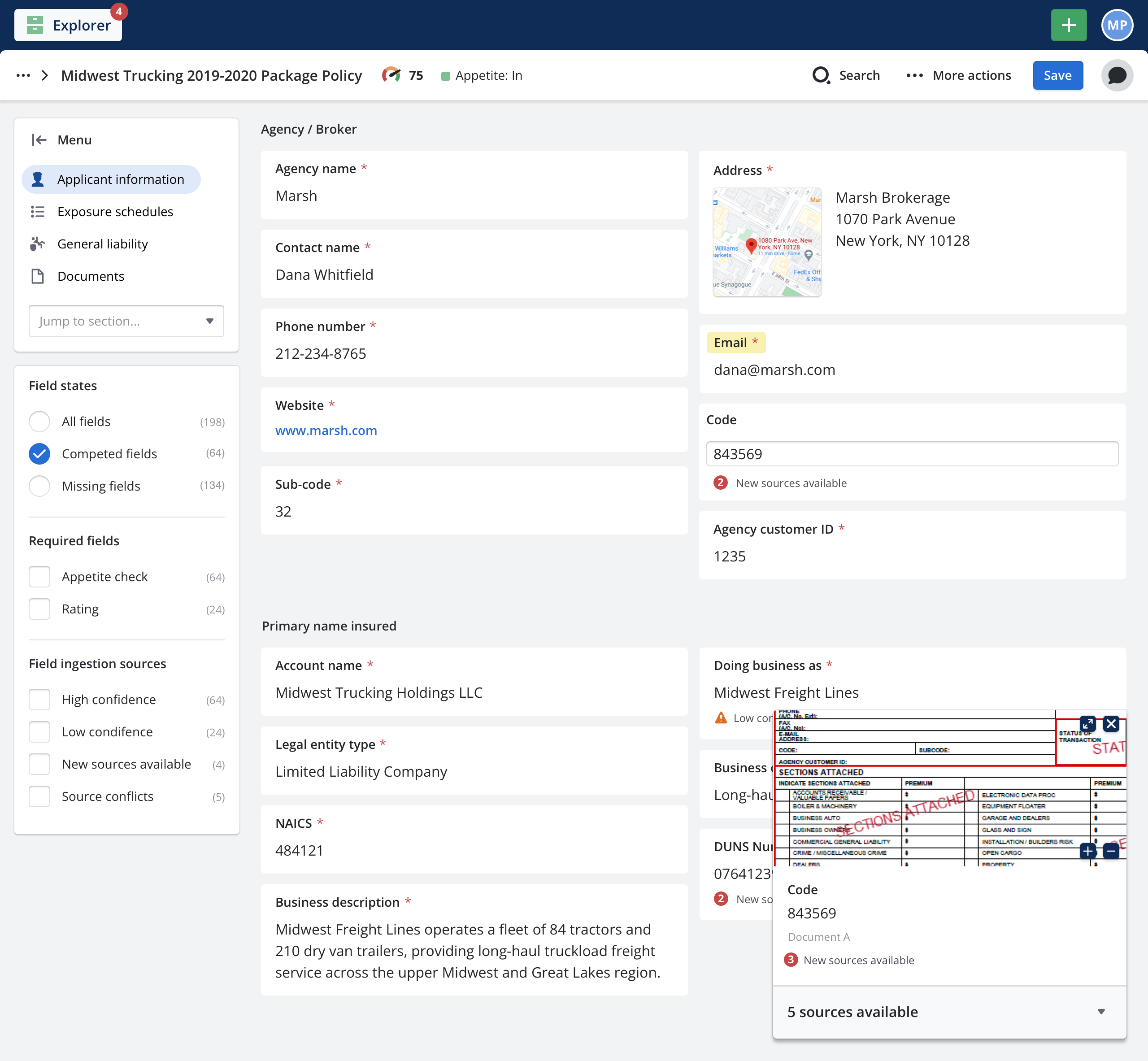
The application view lays out everything pulled in from email and attachments, with filters that jump straight to missing fields or conflicting values. Requesting the missing fields from the broker takes one click.
Showed where every value came from
Each field opens a screenshot of the source document next to a confidence score, so an underwriter can check a value against the original submission without leaving the application.
Let underwriters settle conflicting data in place
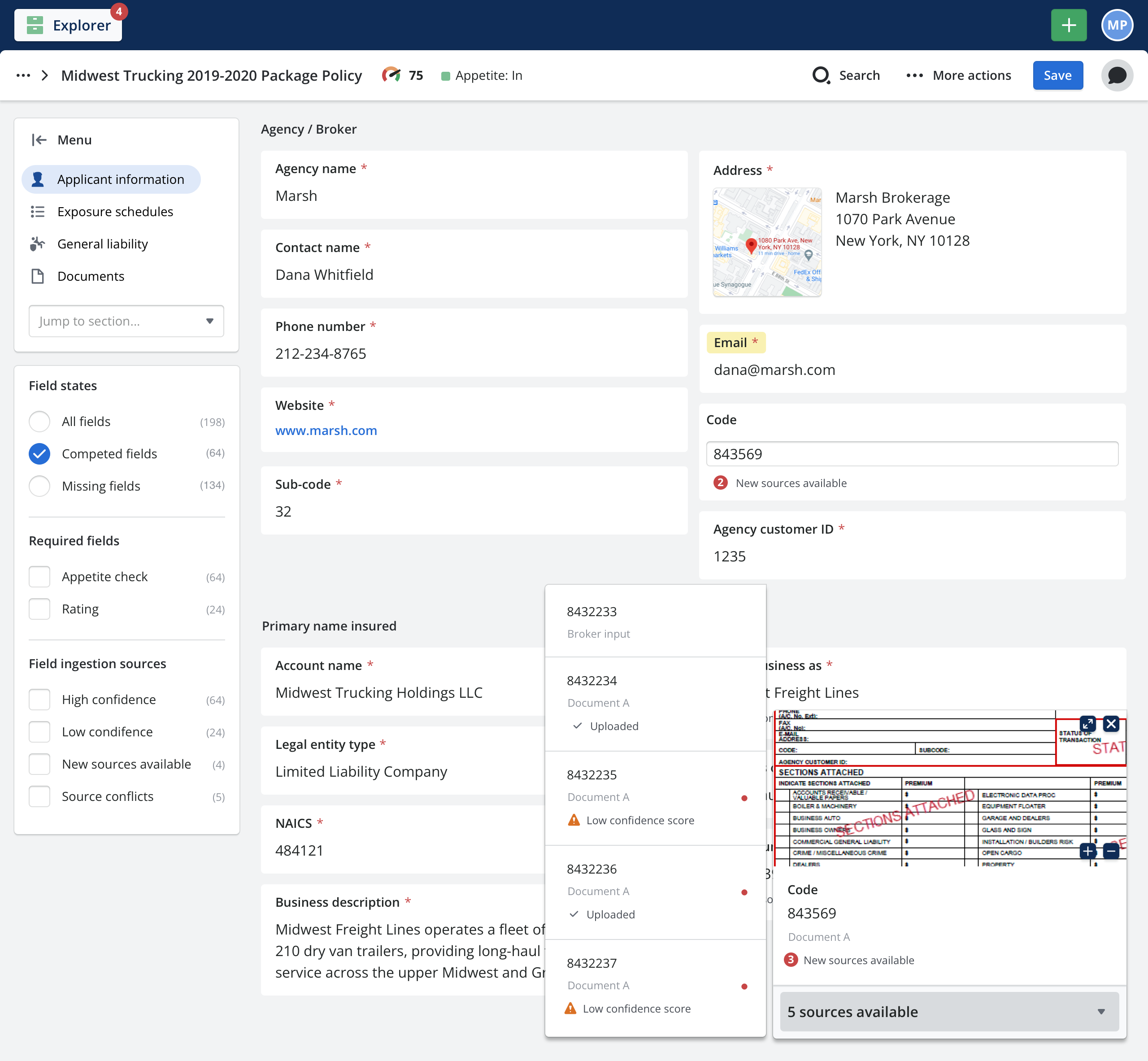
When a later form contradicts an earlier one, every competing value appears alongside its source, and the correct one is chosen in the field itself.
Kept the team working from one application
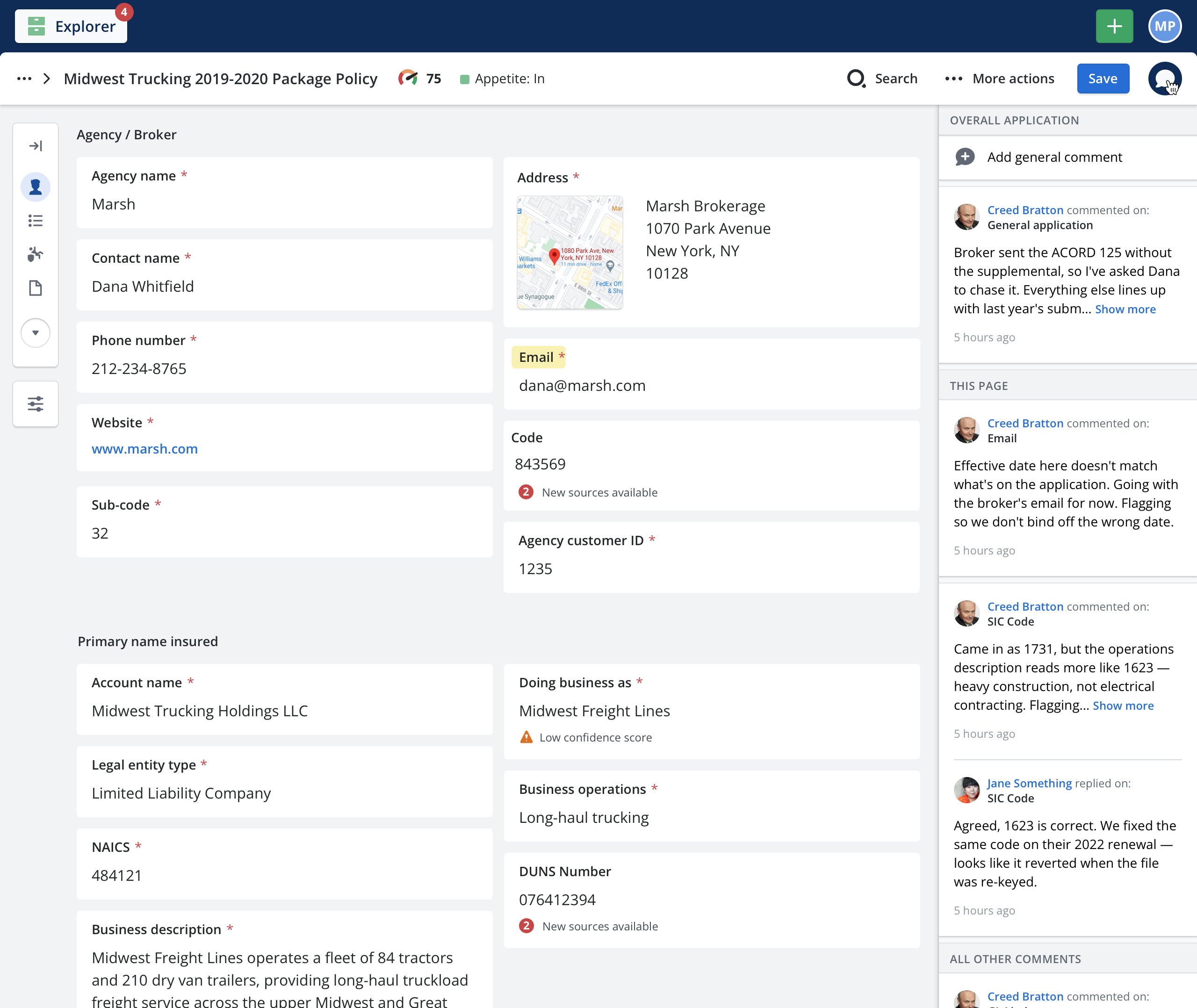
Field-level comments let the underwriting team resolve questions on the application itself instead of moving the conversation to email.
Next case study
RelayRides to Turo rebrand →